How Remote Monitoring of Aggregate Plants Reduces Maintenance Costs?
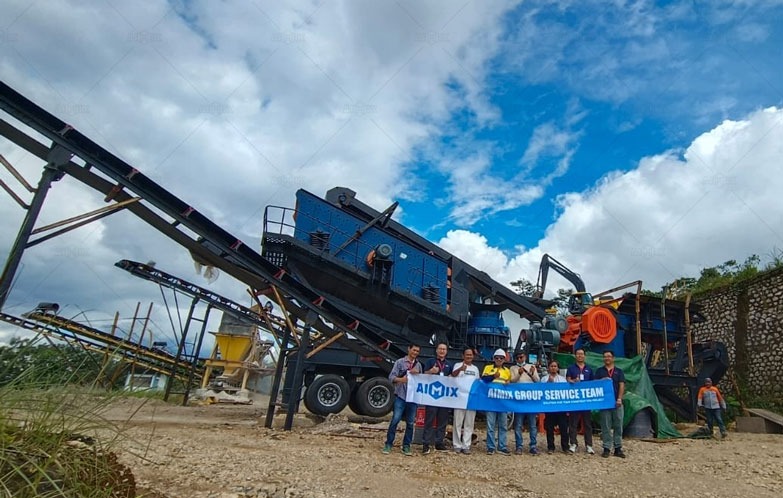
For quarry operators across Latin America, maintenance costs often represent the second-largest expense after fuel. Traditional reactive maintenance—fixing equipment after it breaks—leads to expensive emergency repairs, extended downtime, and shortened component life. However, the rise of remote monitoring technology is changing this equation dramatically. By connecting sensors on an aggregate crusher plant(planta chancadora de agregados) to cloud-based analytics platforms, operators can predict failures before they happen, schedule interventions during planned stops, and reduce overall maintenance spend by 20 to 40 percent.
This article explains how remote monitoring works in crushing operations, whether you manage a stationary aggregate crusher plant for highway base materials or a mobile stone crusher plant serving multiple quarry faces. The principles apply across scales, from single-plant operators to regional fleets.
The High Cost of Unplanned Downtime
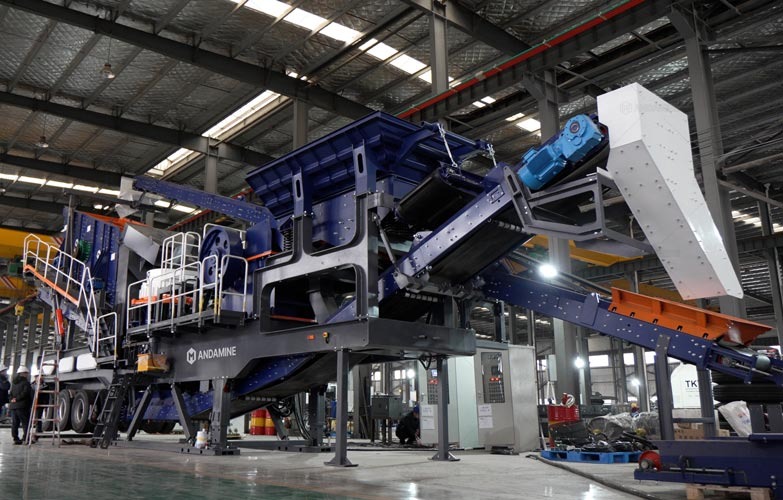
Every hour that a stone crusher plant sits idle due to unexpected breakdowns carries a direct cost: lost production, idle labor, and emergency parts shipping. But the hidden costs are often larger. When an aggregate crusher plant fails without warning, the surrounding equipment—feeders, conveyors, screens—also stops. Restarting a full production line after an unplanned shutdown can take hours longer than a planned start. Operators who rely on reactive maintenance typically spend three to five times more on repairs than those using predictive approaches.
Remote monitoring transforms this dynamic. By continuously tracking vibration, temperature, power draw, and lubricant condition, the system alerts the maintenance team when parameters drift outside normal ranges. A stone crusher plant(planta de trituración y cribado) equipped with such sensors might detect a trending bearing temperature increase days before failure, allowing replacement during a scheduled night shift rather than a catastrophic midday breakdown.
How Remote Monitoring Works in Crushing Operations
Key Sensors and Data Points
An effective remote monitoring system on an aggregate crusher plant measures several critical parameters. Vibration sensors on crusher mainframes detect imbalance or bearing wear. Temperature probes on gearboxes and motor windings identify lubrication breakdowns or overloading. Amperage draw on crusher motors indicates feed rate and chamber packing conditions. Oil particle counters in lubrication systems catch contamination before it damages expensive components.
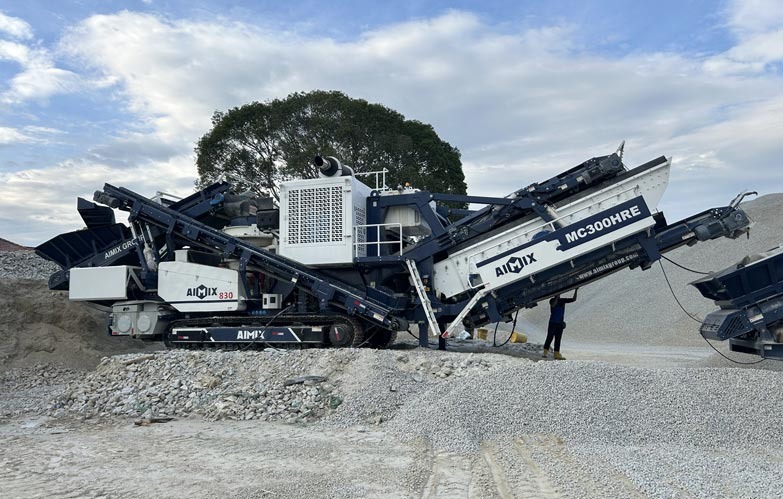
For a mobile stone crusher plant, additional sensors track hydraulic pressure, track tension, and engine parameters. This data transmits via cellular or satellite networks to a central dashboard accessible from any web browser. Operators can monitor multiple aggregate crusher plant installations from a single screen, regardless of distance.
From Data to Actionable Alerts
Raw sensor data alone does not reduce maintenance costs. The value comes from analytics that convert data into actionable alerts. Modern systems use machine learning algorithms that learn normal operating patterns for each specific stone crusher plant. When vibration at a certain frequency exceeds the baseline by a defined threshold, the system generates a maintenance alert with a recommended action—for example, "check cone crusher mainshaft bushings within 40 operating hours."
This predictive capability allows the quarry to order parts in advance, assign mechanics during low-production shifts, and avoid premium freight charges. An aggregate crusher plant that previously required an emergency bearing replacement every six months might extend that interval to 18 months with timely interventions guided by monitoring data.
Lorem ipsum dolor sit amet, consectetur adipiscing elit, sed do eiusmod tempor incididunt ut labore et dolore magna aliqua.
Specific Maintenance Cost Reductions
Extended Wear Part Life
Wear parts—jaw dies, cone liners, impact blow bars—represent a major recurring expense for any stone crusher plant. Remote monitoring helps optimize their life by tracking crusher setting changes and power draw patterns. When the system detects that a cone crusher is running at consistently higher amperage to maintain the same product size, it indicates that liners are wearing and should be rotated or replaced. Running worn liners too long damages the crusher frame and increases power consumption. Changing them at the optimal time, guided by data, reduces cost per ton.
For a mobile stone crusher plant operating in remote locations, monitoring also tracks feed material variations. A sudden increase in fines content or moisture might accelerate wear. The system alerts the operator to adjust feed sources or crusher settings before accelerated wear occurs.
Reduced Lubricant and Filter Consumption
Oil analysis sensors on an aggregate crusher plant provide continuous monitoring of viscosity, water content, and metallic particles. Instead of changing oil on a fixed calendar schedule—often too early or too late—the system recommends changes based on actual condition. One Chilean quarry reduced annual lubricant consumption on its primary jaw crusher by 35 percent after installing remote monitoring, because oil changes shifted from monthly to condition-based intervals averaging 45 days.
Filters also last longer when changes are condition-based. A stone crusher plant operating in dusty conditions might clog filters faster than the standard schedule predicts. Real-time differential pressure monitoring tells mechanics exactly when replacement is needed, preventing premature changes that waste filters or delayed changes that risk engine damage.
Lower Emergency Repair Costs
Emergency repairs carry premium pricing for labor, parts, and shipping. A bearing that fails on a Saturday night requires overtime wages and expedited freight. The same bearing replaced during a planned Tuesday shutdown uses standard labor rates and ground shipping. Remote monitoring on an aggregate crusher plant converts unpredictable failures into scheduled replacements. One Peruvian operator reported reducing emergency repair spending by 62 percent in the first year after implementing remote monitoring across three stone crusher plant sites.
Implementation Considerations
Upfront Investment and Payback
Adding sensors and connectivity to an existing aggregate crusher plant typically costs between $8,000 and $25,000 per crusher, depending on sensor density and network requirements. For a new stone crusher plant, factory-installed monitoring systems add 3 to 5 percent to the purchase price. Payback periods range from six to 18 months based on maintenance savings alone, not counting reduced downtime or extended component life.
For mobile stone crusher plant fleets, cellular-based monitoring requires SIM cards and data plans. However, the cost is minimal compared to the savings from preventing a single major breakdown.
Training and Change Management
Sensors and dashboards are useless if the maintenance team ignores or misunderstands alerts. Successful implementation requires training mechanics to interpret monitoring data and trust predictive warnings. Start with a pilot on one aggregate crusher plant, demonstrate clear savings, then expand to the full fleet. Operators should also configure alert thresholds appropriately—too sensitive generates false alarms that erode trust; too insensitive misses genuine failures.
Real-World Results
A Brazilian aggregate producer equipped three stationary crushers and two mobile stone crusher plant units with remote monitoring. Over 18 months, the system generated 47 predictive alerts. Thirty-nine of those led to scheduled maintenance interventions that prevented unplanned stops. Total maintenance costs dropped 31 percent, and mechanical availability increased from 78 percent to 89 percent. The producer calculated a full return on the monitoring investment within 11 months.
A Colombian contractor operating a mobile stone crusher plant at remote mountain quarries used remote monitoring to track engine health and hydraulic system performance. When the system detected a gradual drop in hydraulic pressure, the team identified a worn pump before it failed catastrophically. The planned replacement took four hours and cost $1,200 in parts. An emergency failure would have required a 12-hour repair and $4,500 in expedited components.
Lorem ipsum dolor sit amet, consectetur adipiscing elit, sed do eiusmod tempor incididunt ut labore et dolore magna aliqua.
Moving From Reactive to Predictive
The shift from reactive to predictive maintenance requires more than technology—it demands a cultural change. However, the financial case for remote monitoring on any aggregate crusher plant is compelling. Lower lubricant consumption, extended wear part life, reduced emergency repairs, and higher availability all contribute directly to improved ROI. For operators of a stone crusher plant in Latin America's challenging environments, where remote locations make breakdowns especially costly, remote monitoring is not a luxury—it is a competitive necessity.
Smarter Maintenance, Lower Costs
Remote monitoring transforms how quarry operators manage their crushing equipment. An aggregate crusher plant equipped with vibration sensors, temperature probes, and oil analyzers provides continuous visibility into component health. That visibility enables condition-based maintenance, eliminating unnecessary part changes while preventing unexpected failures. Whether you operate a stationary stone crusher plant or a mobile unit serving multiple sites, the data-driven approach reduces maintenance costs, extends equipment life, and keeps production lines running. In an industry where every ton counts, smarter maintenance through remote monitoring delivers measurable savings from the first alert.
Lorem ipsum dolor sit amet, consectetur adipiscing elit, sed do eiusmod tempor incididunt ut labore et dolore magna aliqua.
Post a comment